
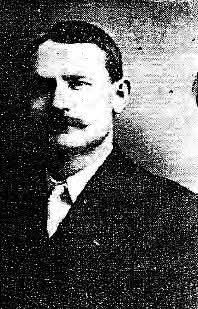
There is a quiet radicalism in the teachings of Hilton Hotema. He did not shout. He did not build a religion. He did not ask for followers. Instead, he invited people to look at life differently—to see that what we call “aging,” “disease,” and even “limitation” may be misunderstandings of our true nature.
At the heart of Hotema’s philosophy is a bold idea: life is not fragile, temporary, or dependent on matter. Life is eternal, intelligent, and self-sustaining. What decays is not life itself, but our belief in limitation.
This shift in perspective changes everything.
Life Is Not the Body
Hotema taught that we have confused ourselves with the physical organism. We say, “I am this body,” and we measure life by the condition of our cells, organs, and years lived. But according to his view, the body is an expression of life—not the source of it.
Life precedes the body. Life animates the body. Life continues beyond the body.
Aging Is a Belief, Not a Law
When we identify solely with flesh and blood, we inherit all the fears that come with it: fear of aging, fear of illness, fear of death. But when we recognize that life is an invisible, intelligent force expressing itself through us, something inside relaxes. We are no longer clinging to survival; we are participating in expression.
This does not mean we neglect the body. On the contrary, we treat it with greater reverence. But we stop worshiping it as our ultimate identity.
One of Hotema’s most controversial ideas was that aging, as we know it, is not an inevitable biological decree but a conditioned belief reinforced by collective acceptance.
From childhood, we are trained to expect decline. We celebrate youth, anticipate deterioration, and accept decay as natural. Society programs us with timelines: at this age you grow, at that age you weaken, eventually you die. We rarely question this script.
Hotema challenged the script.
He suggested that life itself does not age. Life renews. Life regenerates. Nature constantly demonstrates this principle: cells replace themselves, wounds heal, seasons return. The intelligence of life is restorative, not degenerative.
If we align with this renewing principle instead of internalizing the expectation of breakdown, we begin to live differently. Our thoughts become less fearful. Our habits become less destructive. Our sense of possibility expands.
Even if one does not take his ideas literally, the psychological liberation is profound. Imagine living without the countdown. Imagine seeing each year not as a step toward decline, but as another opportunity for deeper expression of vitality.
That shift alone can transform the quality of a life.
Disease as Disharmony
Hotema viewed disease not as punishment or random misfortune, but as a form of disharmony—an interruption in the natural flow of life’s intelligence.
In his perspective, the body is designed for balance. When we interfere through toxic habits, chronic fear, stress, or ignorance of natural law, we create conditions that distort that balance. The result appears as illness.
But the emphasis is not on blame. It is on empowerment.
If imbalance can be created, balance can be restored.
This outlook returns responsibility to the individual—not in a harsh way, but in a liberating one. We are not helpless victims of biology. We are participants in the conditions that shape our experience. By aligning our diet, thoughts, emotions, and environment with natural principles, we cooperate with life instead of resisting it.
Health, then, becomes less about fighting disease and more about removing interference.
Simplicity as Power
A striking feature of Hotema’s philosophy is its simplicity. He advocated natural living, clean food, fresh air, sunlight, moderation, and inner calm. Nothing exotic. Nothing mystical in appearance. Just a return to what he saw as fundamental laws of life.
Modern culture often complicates health and happiness. We search for breakthroughs, miracle cures, secret techniques. Hotema’s message quietly suggests that the essentials have always been available.
Eat simply. Breathe deeply. Think clearly. Live moderately.
This simplicity is not primitive—it is powerful. It restores trust in the body’s innate intelligence. It reduces dependence on external authorities. It reminds us that the most advanced technology on earth is already functioning within us: the living organism animated by universal life.
The Power of Thought
Perhaps the most transformative aspect of his teaching lies in the role of consciousness. Hotema believed that thought is not trivial; it is formative. What we consistently believe shapes our physical and emotional experience.
If we constantly affirm weakness, expect illness, and anticipate decline, we subtly direct our energies toward those outcomes. If, however, we cultivate conviction in vitality, harmony, and longevity, we create a different internal environment.
This is not naive optimism. It is disciplined mental alignment.
Life responds to conviction. The body listens to belief.
To live according to this principle requires vigilance. It asks us to examine inherited assumptions and replace limiting ideas with expansive ones. It invites us to become guardians of our inner atmosphere.
And that is real work.
Fearlessness in the Face of Death
Perhaps the most liberating dimension of Hotema’s vision is its treatment of death. If life is fundamental and eternal, then death is not annihilation but transition—or perhaps even illusion.
This does not trivialize grief. It does not deny the emotional impact of loss. But it dissolves existential terror.
When we no longer see life as a brief spark between two darknesses, urgency softens into purpose. We begin to live from depth rather than panic. We make choices based not on fear of ending, but on love of expression.
Fear contracts life. Trust expands it.
Living as an Expression of Infinite Life
To live in alignment with Hilton Hotema’s teachings is to see yourself not as a fragile biological accident, but as an expression of infinite life. It is to treat your body as a cooperative partner rather than a ticking clock. It is to choose thoughts that affirm vitality rather than rehearse decline.
It is also to take responsibility—gently, steadily—for the conditions you create within and around yourself.
Whether one accepts his ideas literally or metaphorically, their invitation is unmistakable: reclaim your power. Question inherited limitations. Align with renewal. Simplify. Trust life.
And perhaps most importantly, live as though life itself is on your side.
Because if life is not against you—if it is, in fact, expressing itself as you—then every breath becomes less about survival and more about participation.
Not a struggle to endure.
But a force to embody.
***
~Hilton Hotema (1878–1970) was an American natural health philosopher, longevity advocate, and prolific author known for his unconventional views on life, aging, and human potential. A self-educated researcher, he devoted much of his life to studying biology, nutrition, fasting, and the nature of consciousness. Hotema challenged mainstream medical and scientific assumptions, arguing that aging and disease are not inevitable biological laws but the result of ignorance of natural principles.
Through books such as Man’s Higher Consciousness, The Ageless Life, and The Hidden Chamber of Life, he promoted natural living, mental discipline, and alignment with universal life force as keys to vitality and extended lifespan. His work continues to inspire readers interested in alternative health, longevity, and spiritual approaches to life.
Excellence Reporter 2026
Share this:

Categories: Wisdom of Life




 Excellence Reporter