
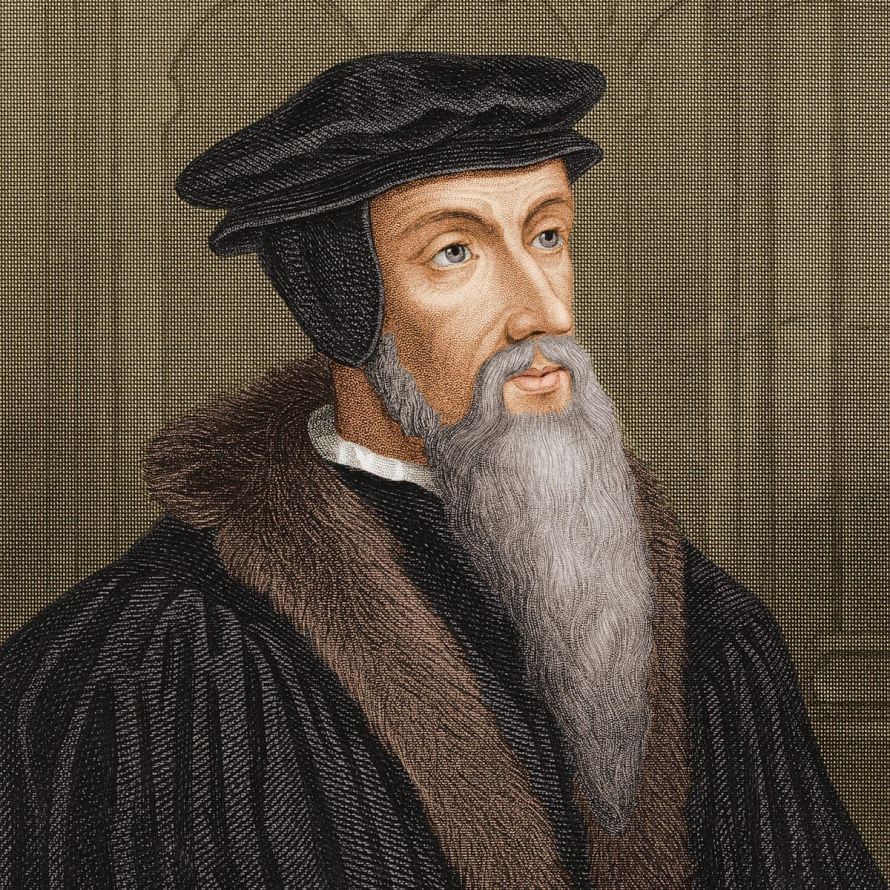
To understand life through the eyes of John Calvin is to see existence not as a self-directed journey, but as a holy calling—a divinely ordered pilgrimage lived coram Deo, before the face of God. Calvin, the 16th-century French theologian and reformer, never treated life as something to be navigated with human intuition alone. Instead, he believed that all of life—our thoughts, actions, relationships, even our suffering—finds its purpose in God’s sovereignty.
“We are not our own: therefore, let not our reason nor our will sway our plans and deeds. We are not our own: therefore, let us not set it as our goal to seek what is expedient for us according to the flesh.”
— Institutes of the Christian Religion, III.7.1
Life as Submission to God’s Sovereignty
For Calvin, life begins and ends with God’s will. This isn’t fatalism. It’s faith. Calvin insisted that God’s providence is not cold determinism but a loving, wise, and all-encompassing governance. Human history, down to the breath of each person, unfolds according to divine purpose.
This belief brings both humility and courage. Humility, because it dismantles our illusion of control. Courage, because it frees us from fear—if God rules, then no suffering, no hardship, no joy is meaningless.
“Ignorance of providence is the ultimate of all miseries; the highest blessedness lies in the knowledge of it.”
— Institutes I.17.11
To Calvin, trusting God’s providence transforms how we live. We no longer ask, “How do I make life work for me?” but rather, “How do I serve God with the life He’s given me?”
Vocation: Living as a Calling
Calvin shattered the medieval divide between sacred and secular by teaching that every legitimate profession is a calling. Whether pastor, farmer, baker, or mother, each role can glorify God.
“The Lord bids each one of us in all life’s actions to look to his calling.”
— Institutes III.10.6
This theology of vocation turned ordinary work into sacred duty. Work is not just a way to earn a living; it’s a way to reflect God’s character through diligence, honesty, and service. Calvin’s Geneva became a city where craftsmanship, education, and civic order all pulsed with spiritual urgency.
This view remains revolutionary. In a world obsessed with status, Calvin’s idea that a cobbler’s labor could please God just as much as a bishop’s is deeply freeing. He invites us to live faithfully where we are, not waiting for some future opportunity to make life count.
The Discipline of Self-Denial
Calvin’s call to self-denial is stark and serious. But it’s not self-hatred. It’s about aligning ourselves with Christ, who laid down His rights for the sake of others.
“The Christian life is a discipline in the mortification of the flesh and the renewal of the spirit.”
— Commentary on Romans 12:1
This discipline is not just about moral restraint—it’s about joy. For Calvin, true joy isn’t found in pursuing our appetites but in knowing Christ and loving others. We deny ourselves not to live less, but to live better—freer from sin, closer to grace.
This is where Calvin’s vision hits hardest in modern life. In a culture driven by self-fulfillment and personal freedom, Calvin says: Freedom is found not in doing what you want, but in surrendering to what is good, true, and eternal.
The Church and the Community of Life
Calvin did not believe we could live faithfully in isolation. The Christian life, he wrote, must be lived in the community of the church.
“We cannot be separated from Christ without being separated from his church.”
— Institutes IV.1.1
The church is where believers are taught, rebuked, fed, and restored. For Calvin, life in Christ is life among His people. This emphasis on the church shaped his reforms in Geneva, where worship, preaching, sacraments, and mutual care structured the rhythm of life.
In our age of individual spirituality and church skepticism, Calvin’s vision is a challenge. He reminds us that life is not a solo act—it is covenantal, communal, and accountable.
Suffering and the Glory of God
Calvin did not romanticize suffering, but he did believe it had purpose. Affliction, he taught, is one of God’s most effective tools for shaping the soul. Life, at times, will be brutal. But none of it is wasted.
“Whatever kind of tribulation we suffer, we should always set before our eyes the glory of God.”
— Commentary on Hebrews 12:5
Suffering disciplines us, strips us of pride, and drives us back to God. Calvin knew this personally—he lived through exile, loss, illness, and public attacks. Yet he never wavered from this belief: God uses suffering to train His children.
Rather than viewing pain as a sign of divine absence, Calvin saw it as a context for deeper dependence. Here, life’s darkest seasons become soil for spiritual growth.
Death as Gain
To Calvin, even death has dignity and purpose. He did not fear it. For the believer, death is not defeat but homecoming.
“As we carry about with us the deadly body of sin, it is better to be released from this prison.”
— Commentary on Philippians 1:21
Calvin’s view of life includes the view of its end—not with despair, but with hope. He looked to the resurrection not as an abstract doctrine, but as the ultimate promise that life, truly lived in Christ, can never be lost.
This eschatological hope changes how we live now. It tells us to endure, to labor, to love boldly, knowing that our lives echo into eternity.
Live Before the Face of God
John Calvin’s vision of life is not for the faint of heart. It is rigorous, sacred, and deeply joyful. His theology calls us to wake up each day with one question echoing in our hearts:
“How can I glorify God today, in this task, in this body, in this fleeting moment of breath?”
This is the heartbeat of Calvin’s theology of life:
“The whole course of our life must be directed to this end, that God may be glorified in us.”
— Institutes III.7.1
To live according to Calvin is not to escape the world, but to enter it with eyes fixed on eternity. It is to plant your feet firmly on the ground and lift your gaze to heaven. It is to work hard, love deeply, suffer patiently, and trust fully—because this life, however brief, belongs not to us, but to God.
And in that surrender, we find not loss, but life—real, full, and indestructible.
****
~John Calvin (1509–1564) was a French theologian, pastor, and reformer who became one of the most influential figures of the Protestant Reformation. Best known for his theological masterpiece, The Institutes of the Christian Religion, Calvin emphasized the sovereignty of God, the authority of Scripture, and the doctrine of salvation by grace through faith. His teachings shaped Reformed theology and had a profound impact on Western thought, education, and civic life. As the leading reformer in Geneva, he helped establish a model of church governance and public life rooted in biblical principles. His legacy continues to influence Christian theology, ethics, and church practice around the world.
Excellence Reporter 2025
Share this:

Categories: Wisdom of Life







 Excellence Reporter