
“People will come to love their oppression, to adore the technologies
that undo their capacities to think.”
“There is only one corner of the universe you can be certain of improving,
and that’s your own self.”
“The secret of genius is to carry the spirit of the child into old age,
which mean never losing your enthusiasm.”
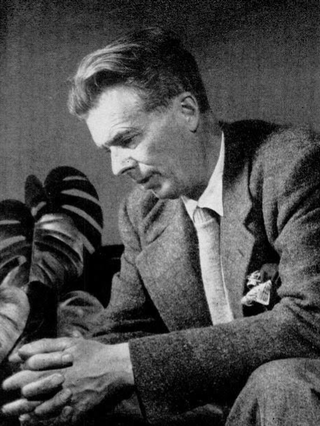
Aldous Huxley was a thinker who saw through the layers of modern life with unsettling clarity. He didn’t just observe the world—he dissected it, questioned it, and challenged us to wake up from the comfortable illusions we build around ourselves. His vision of life was not soft or sentimental. It was raw, philosophical, and often disturbing. But it was also deeply compassionate, offering glimpses of hope and wisdom for anyone willing to listen.
Huxley’s life philosophy emerges from the tension between knowledge and meaning, progress and conscience, comfort and consciousness. His work—ranging from the dystopian classic Brave New World to essays like The Perennial Philosophy and The Doors of Perception—offers a mirror and a warning. But most of all, it offers a call to live more attentively and truthfully.
“The real hopeless victims of mental illness,” Huxley once wrote, “are to be found among those who appear to be most normal.”
This quote sets the tone for understanding Huxley’s critique of modern life. Normality, in his eyes, was not a measure of health. It was a symptom of a society that had traded soul for order, distraction for awareness, and conformity for freedom. He saw a world increasingly numbed by comfort and technology—a world in which people stopped thinking for themselves because systems made it easy not to.
The Tragedy of Comfort
At the heart of Huxley’s worldview is a concern about comfort. Not physical comfort alone, but the kind that dulls the mind and flattens the spirit. In Brave New World, people are pacified by pleasure—endless entertainment, instant gratification, and a drug called soma that keeps pain at bay. But beneath this pleasure is a hollowness, a loss of depth, identity, and freedom.
“Most human beings have an almost infinite capacity for taking things for granted.”
This is Huxley at his most damning. The tragedy, he argues, is not that we suffer. It’s that we cease to care. We stop questioning the systems we live in, the values we hold, the direction our lives are taking. And we do it because it’s easier to look away than to look within.
Consciousness Is Everything
Yet Huxley was not a pessimist. He was a radical realist. He believed that true life—authentic, awakened life—was possible, but only if we were willing to expand our consciousness. That meant moving beyond the superficial and into the profound. For him, the enemy wasn’t suffering, but unconsciousness.
“Experience is not what happens to a man; it is what a man does with what happens to him.”
This single sentence captures his spiritual core. Life is not the external event, the job, the routine, the drama. Life is the interpretation, the awareness, the internal reckoning. Huxley urges us to take responsibility for how we engage with reality. His later writings, especially after his exploration of psychedelics, reveal his belief that human consciousness could be widened to touch something divine—what he called “Mind at Large.”
The Power and Danger of Words
As a master of language, Huxley also understood its double edge. He warned that words could enlighten or manipulate, liberate or enslave. In political and commercial contexts, language was too often used to obscure rather than reveal.
“Words can be like X-rays if you use them properly – they’ll go through anything. You read and you’re pierced.”
This is both a celebration of truth and a warning about propaganda. In a media-saturated age (even more so than Huxley’s own), he reminds us that language is a tool that shapes thought. To live consciously is to learn how to decode the words thrown at us, to recognize when we’re being seduced or deceived.
Individuality vs. Society
One of Huxley’s deepest concerns was the conflict between the individual and society. He saw how industrialization, standardization, and mass media all pushed toward conformity. And he feared that the soul of the individual—our ability to feel deeply, think freely, and choose meaningfully—would be eroded in the process.
“The propagandist’s purpose is to make one set of people forget that certain other sets of people are human.”
This quote rings with terrifying relevance. Whether in politics, war, or advertising, Huxley saw how systems turn people into numbers, groups into labels, lives into abstractions. To resist this, he insisted, is to hold on to our humanity—to remember that every person is sacred, complex, and unique.
Love and the Sacred
Despite his incisive social criticism, Huxley never abandoned the spiritual dimension of life. In his later years, particularly in The Perennial Philosophy, he turned to the wisdom traditions of the world—not for dogma, but for guidance. He believed there was a core truth at the heart of all genuine religion: the possibility of union with something greater than the ego, the self, or the world.
“It is a bit embarrassing to have been concerned with the human problem all one’s life and find at the end that one has no more to offer by way of advice than ‘Try to be a little kinder.’”
This quote is a kind of final summation. After all his explorations—scientific, literary, mystical—Huxley arrived at compassion. Not the kind of kindness that glosses over truth, but the deep empathy that comes from knowing how fragile and mysterious life really is. In a world driven by competition, consumption, and speed, his call to “be a little kinder” is not sentimental. It’s revolutionary.
The Eternal Choice
Ultimately, Huxley believed that life presents us with a constant choice: wakefulness or sleep, love or fear, freedom or conditioning. He understood that these choices are hard. He didn’t promise easy answers. But he gave us tools to see more clearly, to question more deeply, and to live more fully.
“There are things known and there are things unknown, and in between are the doors of perception.”
That space—in between—is where Huxley lived. It’s where he invited us to live, too. To open our eyes, even when the truth is uncomfortable. To think freely, even when it costs us approval. To feel deeply, even when it hurts. To seek the sacred, even in the midst of the profane.
Conclusion: Living the Huxley Way
Aldous Huxley doesn’t give us a blueprint for life. He gives us a challenge. He asks us to be awake in a world that wants us asleep. To be human in a system that prefers consumers. To be kind in a culture that rewards cruelty. To seek truth in a time of noise.
His legacy is not just literary—it’s moral and spiritual. He reminds us that the good life is not the easy life. It’s the conscious life. The examined life. The life that dares to ask the hard questions and live with open eyes and an open heart.
And that, perhaps, is Huxley’s most enduring gift—not his warnings, not his critiques, but his insistence that we are capable of more. That beneath the noise and numbness, there is still a spark waiting to be lit. A door waiting to be opened. A life waiting to be lived—fully, fiercely, and freely.
****
~Aldous Huxley (1894–1963) was an English writer, philosopher, and visionary best known for his dystopian novel Brave New World. Born into a prominent intellectual family, Huxley wrote novels, essays, and social critiques exploring themes of technology, consciousness, freedom, and the human condition. Deeply influenced by science, mysticism, and Eastern philosophy, his later work focused on spiritual awakening and expanded states of mind, especially in books like The Doors of Perception and The Perennial Philosophy. Huxley remains one of the 20th century’s most profound and provocative thinkers.
Excellence Reporter 2025
Share this:

Categories: Wisdom of Life




 Excellence Reporter