
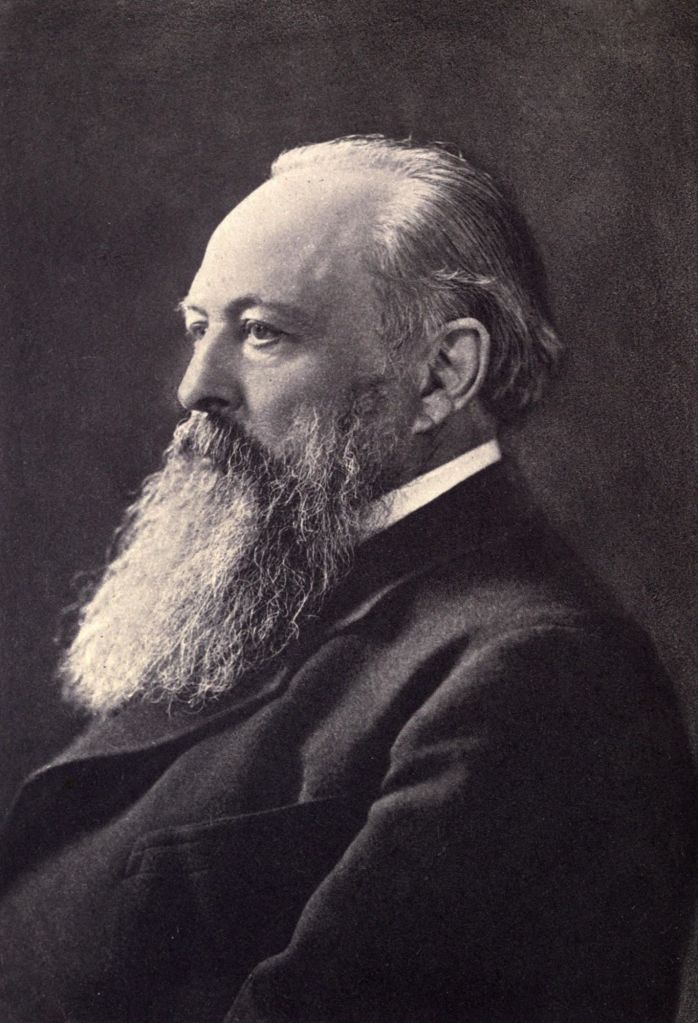
John Emerich Edward Dalberg-Acton, better known as Lord Acton, is remembered for one of the most quoted political maxims in history: “Power tends to corrupt, and absolute power corrupts absolutely.” But reducing Acton to this single sentence does him a disservice. He was a thinker of unusual depth—a moral historian, philosopher, and statesman whose insights into freedom, conscience, and responsibility remain strikingly relevant in the 21st century. His reflections on life challenge us not only to understand the past, but to live more conscientiously in the present.
Freedom as the Highest Good
At the heart of Acton’s worldview was a reverence for liberty—not just as a political arrangement, but as a moral and spiritual necessity. He saw freedom not merely as the absence of constraint, but as the condition under which the highest human virtues—truth, justice, responsibility—could flourish. “Liberty,” Acton wrote, “is not a means to a higher political end. It is itself the highest political end.”
This view of liberty has profound implications for how we live. Acton didn’t celebrate liberty because it made life easier. He celebrated it because it made moral choice possible. To Acton, life was meaningful only if it involved a moral struggle—between duty and temptation, conscience and convenience. He believed that only in a free society can individuals truly be tested, because only then do they have the power to choose rightly or wrongly. “The most certain test by which we judge whether a country is really free is the amount of security enjoyed by minorities.”
Freedom, then, is not about doing whatever we want. It is about creating the conditions where conscience can guide action.
Conscience Above Authority
Acton lived during a time when institutions—both secular and religious—demanded absolute loyalty. But he maintained that no institution, no matter how venerable, could stand above moral judgment. “There is no worse heresy,” he warned, “than that the office sanctifies the holder of it.”
To Acton, conscience was sacred. It stood as the final arbiter in the soul of every human being, more authoritative than kings or popes. His fierce defense of individual conscience wasn’t a call for chaos or relativism. It was a demand for higher standards. Leaders must be judged by moral law, not just political expediency. No one gets a pass. “Great men are almost always bad men,” he observed—not because greatness requires evil, but because power often seduces the great into believing they are above the rules.
In our own lives, Acton’s insight presses on us. We’re tempted to excuse unethical behavior when it benefits us or comes from someone we admire. But Acton demands consistency. Whether in politics, business, religion, or personal relationships, our integrity must not bend to charisma or convenience. Conscience must always have the final word.
History as a Moral Judgment
Acton was a historian who didn’t believe in neutrality. He believed that the study of history had a moral purpose: to judge the rightness and wrongness of actions, to elevate virtue, and to expose the misuse of power. “History,” he said, “should be not only a record of what man has done, but a judgment on what he ought not to have done.”
In Acton’s hands, history becomes a mirror. It reflects not just the triumphs of civilization, but the compromises, hypocrisies, and betrayals that stain human progress. And this matters because history isn’t just about the past—it’s a warning to the present.
Every life is, in a sense, a chapter in the unfolding story of humanity. When we ignore the lessons of history, we repeat its tragedies. When we face history honestly, we learn what real courage, justice, and humility look like.
So what does this mean for how we live? It means we must look back—not to bask in nostalgia or rewrite the past to suit our pride—but to ask what we must do better today. And it means we must be willing to be judged, not only by posterity, but by the eternal standards that make life truly meaningful.
The Moral Cost of Power
Acton’s famous line about power corrupting wasn’t just a warning to emperors and presidents. It’s a warning to every human heart. Power, in any form—be it control over others, influence, wealth, or status—tends to warp our sense of right and wrong. The more power we hold, the more tempted we are to believe we deserve it. And the more likely we are to protect it at the expense of others.
But Acton wasn’t cynical. He didn’t think corruption was inevitable. He believed in accountability, transparency, and moral courage. In his view, the antidote to corruption wasn’t despair—it was vigilance. It was the willingness to question ourselves and our institutions continually.
This is a lesson that applies to daily life as much as it does to politics. Whether we are parents, teachers, managers, or mentors, the power we hold should never be an excuse for self-righteousness. Instead, it should humble us. It should push us to be better, to listen more, to demand more from ourselves than from others.
Legacy and Responsibility
Lord Acton lived a life guided by principle, not popularity. He was willing to stand alone, to criticize his own church and his own political allies when he believed they violated higher truths. This kind of moral courage is rare, and it costs something.
But Acton’s life reminds us that legacy is not about fame or power. It’s about whether we were true to what is right. “A man is not really respectable unless he respects others,” he wrote. And respect, for Acton, meant more than politeness. It meant a deep regard for the dignity and rights of every person, especially those who cannot defend themselves.
In the end, life according to Lord Acton is a call to live with integrity. It’s a call to resist the seductions of power, to listen to our conscience, to learn from the past, and to hold ourselves accountable to something higher than public opinion or personal gain.
It is a demanding vision. But it is also liberating. Because in this vision, life is not measured by what we achieve, but by what we stand for. It is not about being right all the time—but about striving, honestly and courageously, to be good.
And if we can do that—if we can live not just with intelligence, but with wisdom and humility—then perhaps we will leave behind something greater than accomplishments. We will leave behind character.
As Lord Acton would say: “Liberty is the soul’s right to breathe, and when it cannot take a long breath, laws are girdled too tight. Without liberty, man is degraded.”
Let us live in such a way that we never degrade ourselves—or others—by trading conscience for comfort.
****
~John Emerich Edward Dalberg-Acton, 1st Baron Acton (1834–1902), was a British historian, moral philosopher, and politician best known for his penetrating insights into power, liberty, and conscience. A devout Catholic and a fierce advocate of individual freedom, he served as Regius Professor of Modern History at Cambridge University and was editor of the influential The Rambler and The Home and Foreign Review. Acton is most famously remembered for his maxim, “Power tends to corrupt, and absolute power corrupts absolutely,” encapsulating his lifelong belief that ethical judgment must override authority. His intellectual legacy continues to shape discussions on history, governance, and moral responsibility.
Excellence Reporter 2025
Share this:

Categories: Wisdom of Life




 Excellence Reporter
Another excellent post, Nicolae — thank you! The legacy of our lives rests in “whether we were true to what is right;” whether we live our lives “guided by principle.” Conscience Counts. A dictionary definition of the word conscience is: “an inner feeling or voice viewed as acting as a guide to the rightness or wrongness of one’s behavior.” Lord Acton was a voice for “truth, justice, responsibility.” I believe, were he with us today, he’d join the network of GoldenRuleism Ambassadors. He’d be a voice for “The Two Principal Principles of GoldenRuleism”: “Do for all others, both directly and indirectly, what you would want done for you. Don’t do to any others, either directly or indirectly, what you wouldn’t want done to you.” When we imbed the elegant simplicity of “The Two PPs” in our conscience, and endeavor to practice those two principles in our daily lives, we’ll wind up with a universally desirable “life legacy.” We’ll have lived lives of “doing what’s “right.” Craig
LikeLike