
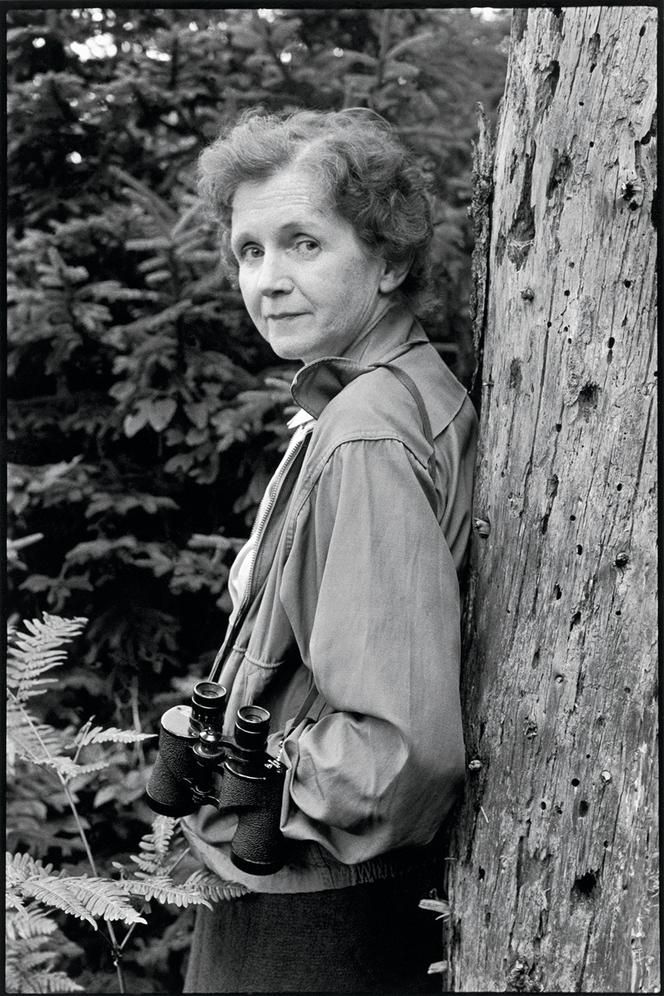
Rachel Carson never shouted. She whispered. And somehow, the whole world heard.
She wasn’t trying to build a movement. She wasn’t chasing fame. She was paying attention—to birdsong, to the flicker of moonlight on the sea, to the thin thread that connects all life. Her words, carried on the wind of truth and tenderness, lit a fire that still burns.
To live according to Rachel Carson is not simply to care about nature—it is to love the world so fiercely, so intimately, that you cannot help but defend it.
She Believed in Wonder Like It Was Prayer
Carson’s life work was rooted not in outrage, but reverence. She saw the Earth not as a resource, but as a gift. Her writing was never about information alone—it was about intimacy.
“A child’s world is fresh and new and beautiful, full of wonder and excitement. It is our misfortune that for most of us that clear-eyed vision… is dimmed and even lost before we reach adulthood.”
She spent her life trying to get that vision back—not just for herself, but for all of us.
Wonder, for Carson, was holy ground. It didn’t require travel or degrees or grandeur. It could be found in a tidepool, in the shimmer of fireflies, in the hush of a pine forest. She wrote not just about ecosystems but about enchantment.
And in doing so, she reminded us that to fall in love with the world is the beginning of everything that matters.
She Saw the Sacred in the Living World
Carson was a scientist by training, but her science never lost its soul. Her writing didn’t separate facts from feeling—it wove them together. She looked at a grain of sand or a drifting seabird and saw the infinite inside the ordinary.
“Those who dwell… among the beauties and mysteries of the earth are never alone or weary of life.”
This wasn’t romanticism. It was deep seeing. Carson understood that the Earth is alive in ways we barely comprehend—and that we are part of that life, not apart from it.
She never argued that humans were bad. What she challenged was forgetfulness. The forgetting that we, too, are wild. That we, too, belong to the soil and the sea.
To live like Carson is to remember.
She Felt the Grief of the World—and Still Chose Hope
Carson’s most famous book, Silent Spring, changed history. It challenged the unchecked use of pesticides like DDT and helped launch the modern environmental movement. But more than a scientific exposé, it was a lament.
She imagined a spring morning without birdsong. A silence not of peace, but of death. A world slowly poisoned by its own hands.
“The control of nature is a phrase conceived in arrogance, born of the Neanderthal age of biology and the convenience of man.”
She was attacked, ridiculed, dismissed. She kept going. Even as cancer weakened her body, she continued to write, to testify, to tell the truth. Not because she believed she would win, but because she believed the Earth deserved a witness.
She once said, “Knowing what I do, there would be no peace for me if I kept silent.” That’s courage—not noise, but quiet, costly faithfulness.
Carson knew the world was breaking. She loved it anyway.
She Listened More Than She Spoke
There’s a stillness in Carson’s voice. A kind of deep listening that feels rare today. She wasn’t interested in dominating debates—she was interested in paying attention.
To the soil beneath our feet. To the invisible balance between creatures. To the fragile web that holds life together.
She listened, and what she heard changed her. That’s why her words still matter—not because they told us what to think, but because they taught us how to see.
In The Sea Around Us, she wrote:
“Eventually, man too found his way back to the sea… and now, after a little more than a century of industrial civilization, he stands poised once more to return to the sea—not to be born anew, but to die.”
That wasn’t a prophecy. It was a plea. To listen. To return. To choose life.
She Believed in the Power of Small Things
Rachel Carson never held political office. She didn’t command armies. She didn’t even live long—just 56 years. But she changed the world because she paid attention to it.
A single woman. A pen. A handful of truths. That’s all it took.
Because Carson understood that real change begins in small, sacred places—in backyards, in tidepools, in the human heart.
“It is not half so important to know as to feel.”
She didn’t just want us to understand nature. She wanted us to feel it—to love it enough to protect it. She knew that facts could inform, but only feeling could transform.
So she wrote for the child standing barefoot in the grass. For the mother wondering what kind of world her child would inherit. For anyone who still had a flicker of wonder left.
Her Light Still Shines
More than sixty years have passed since Silent Spring. The threats Carson warned about have multiplied—climate collapse, mass extinction, poisoned oceans. It would be easy to despair.
But Carson wouldn’t have despaired. She would have stood quietly at the shore, hand over her heart, and listened for the pulse of the Earth. She would have reminded us: this world is worth fighting for—not out of guilt, but out of love.
She believed the Earth could heal if we let it. If we returned with reverence. If we lived, not as conquerors, but as kin.
That’s her legacy. Not just environmental awareness—but emotional awakening.
To Live Like Rachel Carson
To live like Carson is to walk through the world awake. To protect what is fragile. To honor what is beautiful. To speak even when your voice shakes. To act, not because you know you will win, but because you know what’s right.
It means slowing down enough to hear a bird sing. Or to notice when it doesn’t.
It means choosing to feel deeply in a culture that rewards detachment.
It means believing that a life of wonder and courage is still possible—and still necessary.
So go outside. Listen. Touch the bark of a tree. Let a tidepool stir your soul. Let wonder guide your questions. Let grief deepen your love.
Here’s a short, heartfelt bio of Rachel Carson that pairs well with the tone of the article:
As Carson wrote, “The more clearly we can focus our attention on the wonders and realities of the universe about us, the less taste we shall have for destruction.”
In other words: to fall in love with the world is to choose to save it.
****
~Rachel Carson (1907–1964) was a marine biologist, writer, and quiet revolutionary whose work forever changed how we see the natural world. With a rare blend of scientific insight and poetic sensitivity, she awakened the public to the beauty of life and the dangers of harming it. Her groundbreaking book Silent Spring sounded the alarm on pesticides and sparked the modern environmental movement. But more than a scientist or activist, Carson was a soul deeply attuned to the rhythms of nature—believing that wonder, humility, and love for the Earth could shape a better, more honest future.
Excellence Reporter 2025
Share this:

Categories: Nature, Wisdom of Life




 Excellence Reporter