
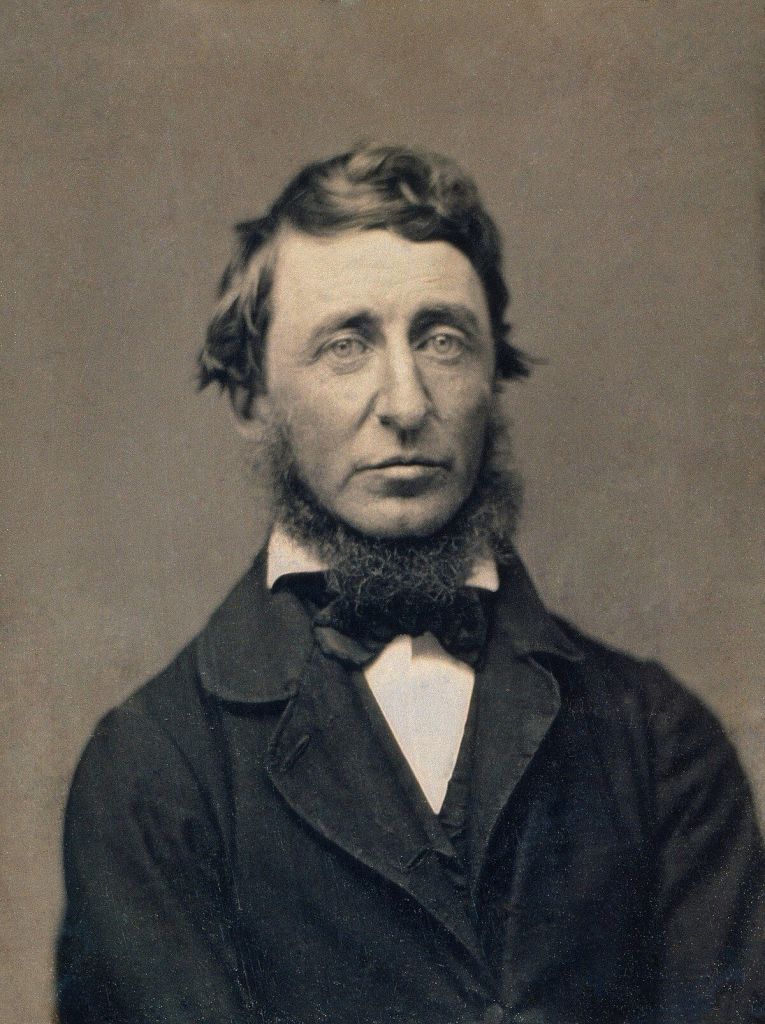
There is a stillness in the woods—a language without words—that Henry David Thoreau understood better than most. He listened to the wind, to the frogs at dusk, to the hush of snowfall in winter, and in all of it, he heard something essential. Something most of us have forgotten: how to be truly, wholly alive.
Thoreau didn’t want a life filled with distractions. He didn’t care for success in the way the world measures it. What he longed for was truth. He wanted to know what life really was when stripped of its polished surfaces and noise. He wanted to taste its marrow.
“I went to the woods because I wished to live deliberately,” he wrote, “to front only the essential facts of life… and not, when I came to die, discover that I had not lived.”
This sentence holds the soul of Thoreau’s philosophy. Not just a desire to live—but to not waste life. To not look back in your final hour and feel the ache of never having been fully present. His was a call to wake up, to stop drifting, to face life with eyes wide open and heart uncovered.
The Courage to Be Simple
Simplicity wasn’t an aesthetic choice for Thoreau. It was a moral one. It was his way of telling the world: I will not sell my soul for comfort. When he built a cabin by Walden Pond and chose to live alone with just the barest necessities, it wasn’t a retreat—it was a reckoning. He wanted to see what remained when everything superficial fell away.
“Our life is frittered away by detail… Simplify, simplify.”
That’s not just advice. It’s an invitation. And in a world where we are pulled in a thousand directions, where our value is often measured in productivity, Thoreau’s voice is more urgent than ever. He believed that only in simplicity could the heart speak. Only in silence could we hear what matters.
He did not despise the world. He just saw through its illusions. He saw how easily people are trapped by things—possessions, appearances, expectations—and how often they trade their freedom for approval. He chose another path. Not because it was easy, but because it was true.
Living From the Inside Out
Henry David Thoreau lived by one guiding principle: the inner life must lead the outer one. He distrusted any authority that tried to define meaning for him—governments, churches, even social norms. He believed that the deepest wisdom comes from within, that each person is a soul unfolding in their own time.
“If a man does not keep pace with his companions, perhaps it is because he hears a different drummer.”
There is deep tenderness in that line. Thoreau is not mocking those who move differently—he is blessing them. He is giving permission to anyone who feels out of step, who doesn’t fit neatly into the world’s rhythm, to trust themselves anyway.
This is not just philosophy. It’s spiritual survival. Because to live from the inside out—to honor your own intuition, your own questions, your own timing—is to protect your soul from being slowly buried under a life that isn’t yours.
The Sacredness of Nature
To Thoreau, nature was not scenery. It was sanctuary. It was where the divine revealed itself in the ordinary—an acorn, a ripple on the pond, the turning of leaves. He didn’t go to the woods to escape life. He went there to meet it more intimately.
“Heaven is under our feet as well as over our heads.”
He saw no separation between spirit and earth, between body and soul. The natural world was his teacher. It taught him patience. It taught him humility. And perhaps most importantly, it taught him presence. In the woods, there was no performance. No need to impress. Just being.
Today, many of us live disconnected from that sacredness. But Thoreau would tell us that the trees are still speaking. The wind is still singing. And if we are very quiet, if we put down our screens, our ambitions, our fears—we might hear it again.
Time as a Sacred Currency
Thoreau understood the one thing we all know but struggle to live by: time is not a resource—it is life itself. And it is fleeting.
“As if you could kill time without injuring eternity.”
He wasn’t being poetic for its own sake. He meant it. Every moment spent half-living, every hour given away to things that don’t feed the soul—that is a wound. Not to the clock, but to the spirit.
He challenged us to ask, again and again: Am I awake? Am I alive? Not just breathing, not just functioning—but alive in the marrow-deep way that animals are, children are, that perhaps we once were before the world taught us to be efficient instead of present.
Death, and the Light It Casts on Life
Thoreau was not afraid of death. What he feared was coming to the end of life and realizing he had missed it. He let death sharpen his sense of urgency. Not panic, not fear—but reverence.
“To be awake is to be alive.”
His life was not long—he died at 44—but it was full in the deepest sense. Full of truth. Full of quiet rebellion. Full of fierce gentleness. He didn’t wait for permission to live the way he believed. He simply began.
And in doing so, he left behind not just books, but a way of being. A kind of map—not outward, but inward.
His Call to Us
If Thoreau were here today, he wouldn’t give us a list of goals. He wouldn’t ask us to fix ourselves or hustle harder. He would ask something much harder. He would ask us to be honest. About what we love. About what we’ve lost. About what we long for.
He would tell us to walk away from the noise, just for a while, and listen. To the wind. To the water. To the small, still voice inside that remembers who we are.
He would remind us that we don’t need more—just more meaning. That a quiet life, lived from the heart, is not a small life. It is the bravest kind.
And he would whisper—gently but firmly—Don’t wait.
“Go confidently in the direction of your dreams. Live the life you have imagined.”
Not someday. Not perfectly. But now. In the quiet of an ordinary morning. In the hard choice to say no. In the walk through the woods. In the breath you remember to take.
That is what Thoreau taught: not how to escape life—but how to finally meet it.
****
~Henry David Thoreau (1817–1862) was an American writer, philosopher, naturalist, and transcendentalist best known for his book Walden, a reflection on simple living in natural surroundings. Born in Concord, Massachusetts, Thoreau was a keen observer of nature and a fierce advocate for individual conscience and civil liberties. He practiced what he preached—living deliberately, minimizing material needs, and valuing inner truth over social conformity. His essay Civil Disobedience, inspired by his refusal to pay taxes in protest of slavery and the Mexican-American War, deeply influenced leaders like Gandhi and Martin Luther King Jr. Though he lived only 44 years, Thoreau’s legacy endures as a voice for simplicity, authenticity, and spiritual resistance.
Excellence Reporter 2025
Share this:

Categories: Wisdom of Life






 Excellence Reporter