
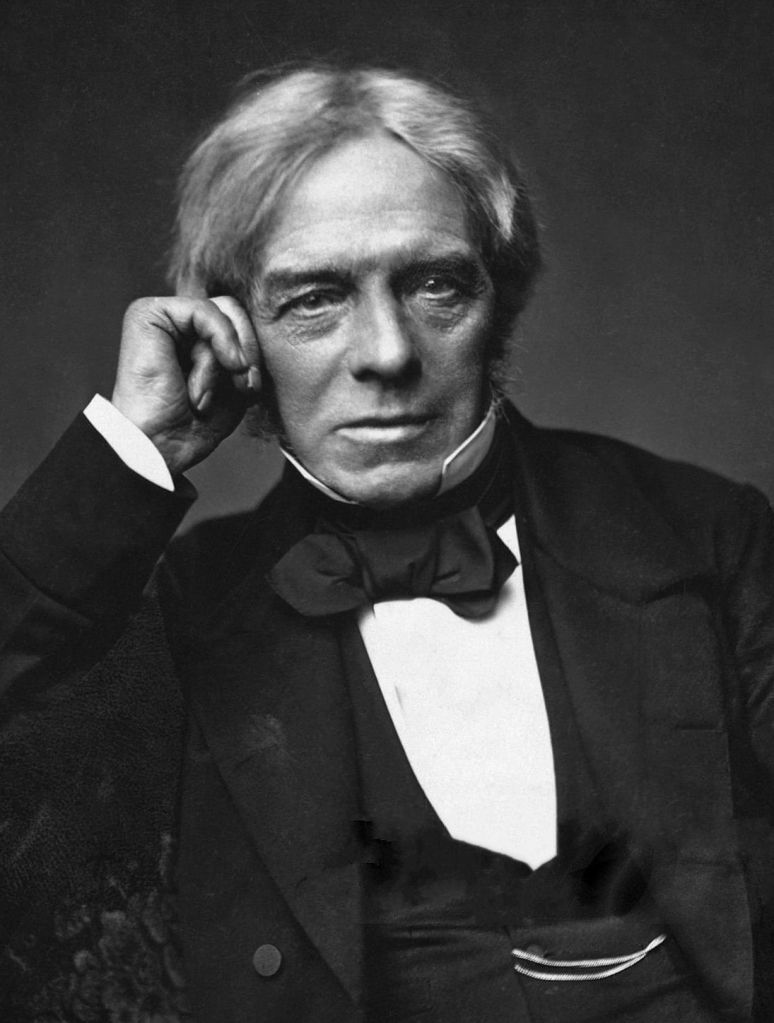
In the grand theater of scientific progress, few figures shine as brightly—and as humbly—as Michael Faraday. Born in 1791 to a poor blacksmith in London, Faraday received little formal education. Yet he rose to become one of the most influential experimental scientists in history, laying the foundations of electromagnetism and electrochemistry. But Faraday’s life wasn’t just about scientific discovery. It was about how to live—with purpose, integrity, humility, and insatiable curiosity.
Faraday wasn’t a man who chased fame. He chased understanding. He didn’t live for recognition. He lived for truth. And along the way, he left a blueprint for what it means to live a life of meaning, guided by the love of knowledge and the courage to question the world.
“Nothing is too wonderful to be true, if it be consistent with the laws of nature.”
Faraday’s life is a testament to this belief. He refused to put limits on what was possible. Despite growing up in poverty, apprenticing as a bookbinder, and having no university degree, he built a scientific legacy rivaled by few. His experiments led to the invention of the electric motor, the dynamo, and paved the way for modern physics and technology. But behind the breakthroughs was a deeper philosophy—one that prized relentless curiosity and the humility to let nature speak for itself.
The Power of Ignorance—and the Courage to Ask
Faraday believed ignorance wasn’t a weakness—it was the starting point of learning. His early years in a bookbinding shop gave him access to volumes that sparked his fascination with electricity and chemistry. He taught himself, took notes, asked questions. He didn’t pretend to know—he pursued the not-knowing with tenacity.
“A man who is certain he is right is almost sure to be wrong.”
That humility—to not assume, but to inquire—was the engine behind Faraday’s genius. In our age of hot takes and overconfidence, Faraday’s approach reminds us to slow down and ask better questions. To sit with uncertainty long enough to let it teach us something new.
Live for the Work, Not the Applause
Despite his towering contributions to science, Faraday turned down a knighthood. He declined the presidency of the Royal Society. He refused to profit from patents on his inventions. He believed science should serve humanity, not personal gain.
“Work. Finish. Publish.”
That was his ethic. Simple. Unpretentious. Focused.
Faraday teaches us that life isn’t about chasing status—it’s about doing the work that matters, even if no one notices at first. In a world where validation is often sought in likes, titles, and trophies, Faraday stands as a rebuke and an inspiration: let the work speak.
Faith, Ethics, and the Soul of a Scientist
Faraday was deeply religious, a devout member of the Sandemanian church. His faith wasn’t a contradiction to his science—it was his foundation. It gave him a moral compass and a sense of purpose. He refused to participate in the development of chemical weapons. He believed in the responsibility that comes with knowledge.
“I have far more confidence in the one man who works mentally and bodily at a matter than in the six who merely talk about it.”
He was not just a scientist. He was a moral force. He showed that brilliance without integrity is shallow—and that living rightly is just as important as thinking deeply.
Curiosity Is a Way of Life
What animated Faraday was wonder. He was fascinated by the invisible forces of nature—the lines of magnetic force, the spark of electricity, the dance of atoms. He once said:
“The important thing is to know how to take all things quietly.”
This wasn’t apathy. It was attentiveness. Faraday moved through the world with reverence. He believed nature held secrets waiting to be uncovered by the patient and the persistent. He didn’t just observe the world—he listened to it. To live like Faraday is to cultivate that same wonder. To see the miraculous in the everyday. To never outgrow the desire to understand.
Education for All
Faraday never forgot where he came from. Though he lectured royalty and earned the admiration of Einstein and Maxwell, he remained committed to making science accessible. His famous Christmas Lectures at the Royal Institution—some of which are still held today—were designed to ignite young minds. He believed knowledge should be shared, not hoarded.
He understood that the greatest discoveries mean little if they aren’t communicated with clarity and passion. Faraday’s legacy is not just what he discovered—but how he invited others to explore alongside him.
Failure Is a Step, Not a Stopping Point
Faraday failed often. His early experiments didn’t always yield results. He made mistakes. But he embraced failure as part of the process. He once said:
“But still try, for who knows what is possible?”
This mindset—that the unknown is not a wall but a door—transformed not only Faraday’s career but the trajectory of science itself. He teaches us that failure isn’t the opposite of progress—it is progress, if we let it be.
The Quiet Revolutionary
Faraday didn’t shout. He didn’t seek controversy. But his discoveries overturned centuries of thinking. He bridged chemistry and physics. He introduced field theory. He laid the groundwork for electric power and technology that fuels our modern lives.
Yet he remained humble.
“Nature is our kindest friend and best critic in experimental science if we only allow her intimations to fall unbiased on our minds.”
There’s a quiet, almost poetic strength in Faraday’s life. He reminds us that you don’t have to be loud to change the world. You just have to be true—to the work, to your values, to the mystery that called you in the first place.
Living Like Faraday Today
What does it mean to live like Faraday now?
It means being relentlessly curious, even when the answers aren’t obvious. It means putting in the hours, the patience, the care—without the guarantee of praise. It means choosing integrity over convenience, wonder over cynicism, truth over ego.
Faraday’s life is proof that greatness doesn’t come from background, privilege, or fame. It comes from discipline, humility, and a fierce devotion to discovery. He lived simply but thought expansively. He worked quietly but changed everything.
In a noisy, fast-paced world, his example is radical: slow down. Ask questions. Follow truth. Work without boasting. Share what you learn. Stay humble. Stay curious.
And never, ever stop wondering.
“Nothing is too wonderful to be true.”
Neither is the life you could live, if you dared to think like Faraday.
****
~Michael Faraday (1791–1867) was a British scientist who made groundbreaking contributions to electromagnetism and electrochemistry. Born into poverty with little formal education, he rose to become one of the most influential experimental physicists in history. Faraday discovered electromagnetic induction, invented the electric motor and dynamo, and introduced key concepts like the electromagnetic field. Known for his humility, integrity, and passion for accessible science, he also pioneered public education through his famous Royal Institution lectures. Faraday’s life and work continue to inspire generations of scientists and thinkers worldwide.
Excellence Reporter 2025
Share this:

Categories: Wisdom of Life





 Excellence Reporter