
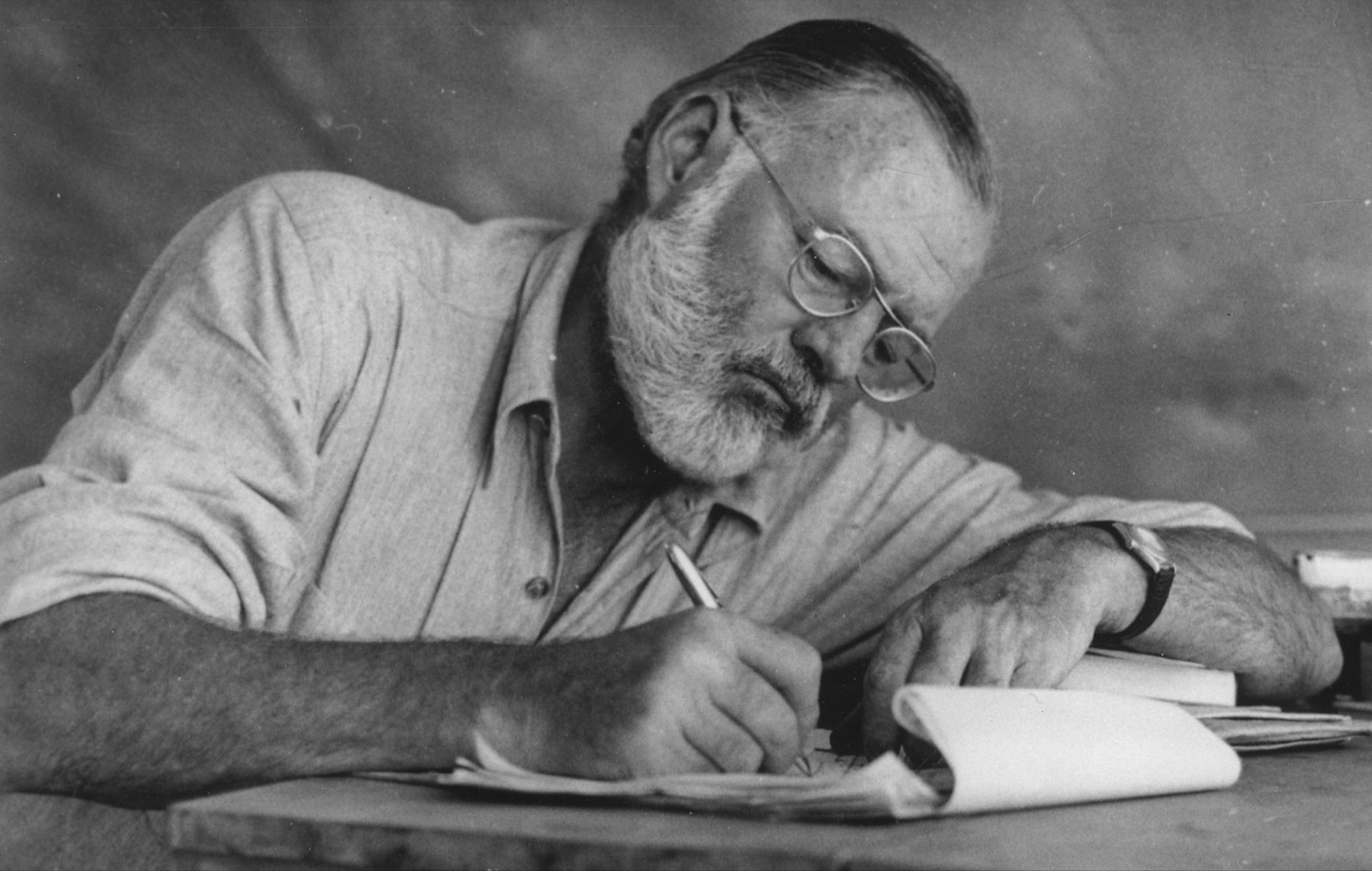
Ernest Hemingway didn’t just write about life—he wrestled with it, lived it hard, and squeezed meaning from every hour. War correspondent, fisherman, boxer, big-game hunter, bullfight aficionado—Hemingway wasn’t interested in comfort zones. His life and work were forged in conflict, in love, in loss, and in the raw pursuit of truth. What makes his philosophy so compelling is its stripped-down, no-nonsense clarity. He believed in living authentically, enduring suffering with grace, and doing your work with integrity.
His lessons aren’t complicated. But they’re not easy, either.
Let’s walk through what Hemingway taught us about how to live—honestly, courageously, and with purpose.
Face the World Head-On
Hemingway wrote: “The world breaks everyone and afterward many are strong at the broken places.”
Life, to Hemingway, was not meant to be coddled. It was a brutal, beautiful thing that could shatter you. But that breaking wasn’t the end—it was a test. And surviving it gave you strength that comfort never could.
He saw suffering not as something to avoid, but as a forge. The pain you endure carves out depth in your character. He didn’t romanticize pain—he endured it. And that’s the difference. You don’t have to enjoy the struggle, but you have to go through it, eyes open.
To live fully, you have to risk being broken. You have to step into the fight—whether it’s war, love, creation, or grief—and take your punches.
Be True in Your Work
For Hemingway, writing was sacred. He approached it with respect, even when it crushed him. He said: “All you have to do is write one true sentence. Write the truest sentence that you know.”
This wasn’t just about writing—it was about life. Hemingway believed in cutting through the lies we tell ourselves and others. Whether on the page or in conversation, he aimed for truth. And that’s what gave his prose its sharp edge and enduring power.
He stripped away ornament, avoided the overly intellectual, and told stories like a man trying to get the facts down before the world fell apart. His advice? Be honest. Say what you mean. Mean what you do.
In your work, whatever it is, strive for that same kind of integrity. Don’t fake passion, and don’t do it for applause. Do it for the craft. Hemingway’s life was full of contradictions and failures, but he never lost sight of the work. That was his anchor.
Live Bravely, Even in the Face of Fear
“Courage is grace under pressure.”
This is one of Hemingway’s most famous lines, and it still cuts clean. He wasn’t impressed by bravado or empty gestures. Courage, to him, was quiet. It showed up when things got hard.
He admired those who stood their ground when the odds were bad—like the bullfighters in Death in the Afternoon, or the old man in The Old Man and the Sea. In Hemingway’s world, courage wasn’t about winning—it was about refusing to quit, even when the sea gives you nothing.
Life throws punches. Courage means you take them, stay standing, and keep going. Not because you’ll win, but because quitting isn’t the way.
Embrace Simplicity
Hemingway’s prose was lean. He once said: “My aim is to put down on paper what I see and what I feel in the best and simplest way.”
He stripped the fat from his sentences the way he stripped distractions from his life. His characters often lived close to nature, far from luxury. He believed there was beauty in living simply, honestly, and with purpose.
In a world obsessed with more—more money, more likes, more stuff—Hemingway reminds us that clarity is often found in less. Fewer words. Fewer distractions. More focus.
Try it. Cut the noise. Listen. Watch. Strip your life to what matters.
Love Deeply, Even If It Hurts
“When you love you wish to do things for. You wish to sacrifice for. You wish to serve.” — A Farewell to Arms
Hemingway loved recklessly and often. He married four times. He burned through passion like kindling. He knew love could destroy you—but he also knew it was worth it.
He wrote about love with brutal honesty. It wasn’t always redemptive. Often, it ended in heartbreak, death, or disillusionment. But he never dismissed it.
Love, in Hemingway’s world, was one of the few things that gave life meaning. Whether between soldiers and nurses, old men and the sea, or friends sharing a bottle of wine in Spain—real love asked you to give yourself fully.
So don’t hold back. Let it matter. Let it risk you.
Know How to Be Alone
Hemingway spent long stretches in solitude—writing, fishing, hunting. He once said: “I have learned a great deal from listening carefully. Most people never listen.”
He understood the value of silence, of observation, of being alone with your thoughts. In a noisy world, solitude isn’t emptiness—it’s clarity.
Aloneness gives you a chance to hear yourself think. To make sense of what you’re doing. To create. To recover. You don’t have to be a recluse—but learning how to be alone without being lonely is a skill worth mastering.
You’re Not Promised Time—Use It
Hemingway lived like he knew the clock was ticking. He fought in wars, covered revolutions, survived plane crashes, and drank like he didn’t expect tomorrow.
That wasn’t recklessness—it was urgency. A refusal to waste the one life he had.
“The best way to find out if you can trust somebody is to trust them.” That line applies not just to people, but to life itself. At some point, you have to stop hesitating and live.
Write the book. Take the trip. Say the thing. You won’t always get another shot.
Final Word: Be the Hero in Your Own Story
Hemingway didn’t believe in passive living. His heroes acted. They struggled. They failed. But they chose.
That’s your job too. To choose the hard thing over the easy lie. To choose love over safety. To choose courage over comfort. To show up, even when it hurts.
As he wrote in The Old Man and the Sea: “A man can be destroyed but not defeated.”
Let that be your compass. Don’t wait for life to happen to you. Take it in your hands. Make it count.
Live with grace under pressure.
***
~Ernest Hemingway was an American novelist, journalist, and Nobel Prize winner known for his terse prose and adventurous life. A war correspondent, fisherman, and big-game hunter, he wrote classics like The Old Man and the Sea, A Farewell to Arms, and For Whom the Bell Tolls. His writing style and philosophy—marked by courage, simplicity, and emotional honesty—left a lasting mark on 20th-century literature.
©Excellence Reporter 2025
Share this:

Categories: Wisdom of Life






 Excellence Reporter