
“Passionate hatred can give meaning and purpose to an empty life.”
“The hardest thing to cope with is not selfishness or vanity or deceitfulness, but sheer stupidity.”
“The hardest arithmetic to master is that which enables us to count our blessings.”
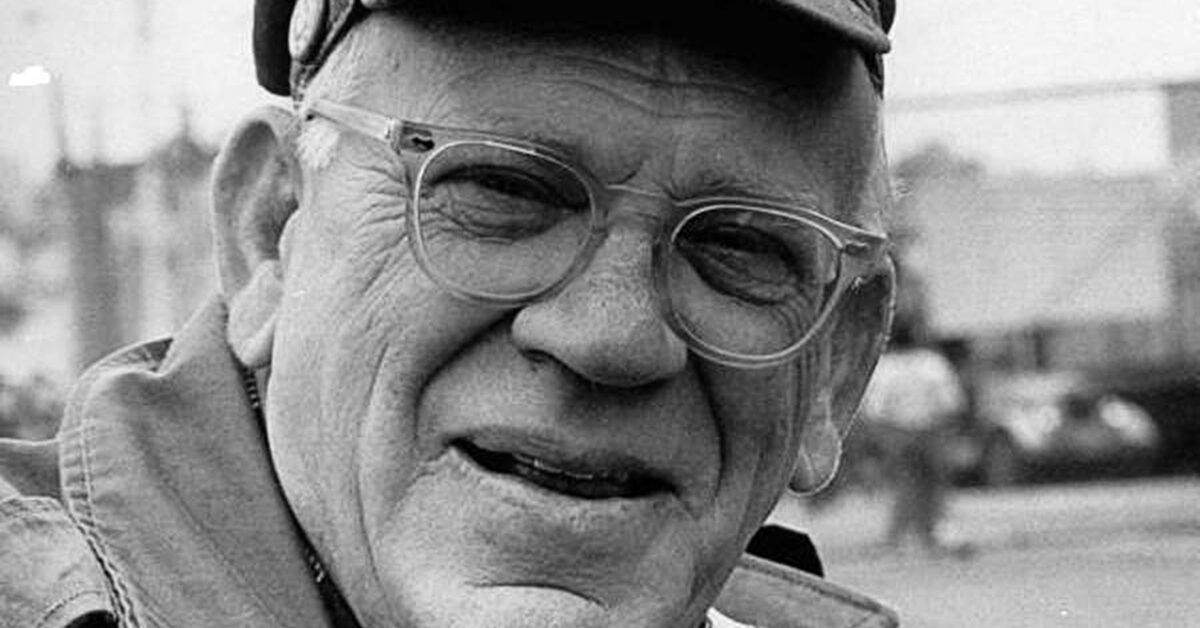
Eric Hoffer, the longshoreman philosopher, was a man of paradoxes. Born in poverty and largely self-educated, he spent much of his life doing manual labor while writing some of the most incisive social philosophy of the 20th century. Hoffer had a unique vantage point on human nature and society, forged from experience rather than academia. His writings carry a raw honesty, often blunt but always insightful, about what it means to be human.
One of Hoffer’s most famous works, The True Believer, dissects the nature of mass movements and the psychology of those who join them. But his wisdom stretches far beyond politics. His reflections on life, work, self-respect, and change speak to anyone who’s ever struggled with purpose, identity, or belonging. Hoffer didn’t dress his thoughts in scholarly jargon. He spoke clearly and practically, like someone who had lived what he was talking about.
“It is startling to realize how much unbelief is necessary to make belief possible,” he once wrote. In a single line, Hoffer captured the human tendency to abandon reason for certainty, to find refuge in systems and ideologies that provide structure even if they distort reality. He understood that people crave purpose, and when they can’t find it in themselves, they look for it outside—in movements, causes, or leaders.
This longing for meaning is part of the human condition, Hoffer believed, but it comes with risks. “When people are free to do as they please, they usually imitate each other,” he observed. In this, he pointed out a paradox of modern life: we seek individuality, yet fall into conformity. We say we want freedom, but often use it to bind ourselves to trends, groups, or identities that numb us from the burden of thinking for ourselves.
Hoffer’s philosophy wasn’t cynical; it was bracing. He believed in the strength of the individual, but only when that individual was willing to face reality, work hard, and stay grounded. “The hardest arithmetic to master is that which enables us to count our blessings,” he said. Gratitude, for Hoffer, wasn’t just a virtue—it was a form of clear thinking. When you appreciate what you have, you stop chasing illusions.
He saw work as a fundamental human good. Not just as a means to earn, but as a way to stay rooted in the real world. “Our greatest weariness comes from work not done,” he said. In a culture increasingly obsessed with ease and comfort, Hoffer’s respect for labor is a powerful reminder that fulfillment comes from effort, not indulgence.
Hoffer also spoke often about change—how people change, and how societies do. “In times of change, learners inherit the earth, while the learned find themselves beautifully equipped to deal with a world that no longer exists.” This is one of his most quoted lines, and for good reason. It reminds us that adaptability matters more than credentials, and that clinging to the past—no matter how comfortable—is a recipe for irrelevance.
He challenged the idea of fixed identity. He believed that people become who they are by what they choose to do. “Man is the only creature that strives to surpass himself,” he wrote. “He is the only creature that refuses to be what he is.” This refusal, this restlessness, is both a gift and a burden. It drives innovation and growth, but also dissatisfaction and instability.
Hoffer didn’t offer easy answers, but he gave people tools for thinking. He believed that wisdom wasn’t about knowing facts but understanding patterns. He wasn’t interested in telling people what to think, only in urging them to think at all. “To know a person’s religion, we need not listen to his profession of faith but must find his brand of intolerance.” With this, he cut to the heart of hypocrisy, reminding us that true belief is measured by actions, not words.
So what can we learn from Hoffer today, in a world that feels more chaotic than ever?
First, that wisdom starts with self-awareness. Knowing our own tendencies toward conformity, certainty, or avoidance gives us the power to resist them. Second, that real strength lies in work, gratitude, and humility. And third, that change is not our enemy—stagnation is. To keep growing, we must keep learning.
In a time of shallow distractions and performative belief, Hoffer’s call to grounded thinking and honest labor is more relevant than ever. He challenges us to live deliberately, to resist the urge to drift into easy answers, and to find dignity in who we are and what we do. As he said, “You can discover what your enemy fears most by observing the means he uses to frighten you.”
This is not just social insight; it’s life advice. Understand what manipulates you, and you gain power over your own mind. Understand what you avoid, and you uncover what matters. Understand your work, and you understand yourself.
Eric Hoffer didn’t want followers. He wanted thinkers. His wisdom isn’t flashy, but it endures. Because at its core, it’s about the kind of truth that doesn’t age. As he once wrote: “Rudeness is the weak man’s imitation of strength.” That applies not just to manners but to our entire culture. We too often mistake noise for confidence, volume for vision, and trends for truth.
But Hoffer offers another way—one grounded in effort, honesty, and a clear-eyed view of human nature. It’s not always comfortable. But it’s real. And in the end, that’s what lasts.
***
~Eric Hoffer (1902 – 1983) was an American philosopher and social critic. A conservative moderate with an atypical working-class background, Hoffer authored ten books over his career and was awarded the Presidential Medal of Freedom in February 1983. His first book, The True Believer (1951), was widely recognized as a classic, receiving critical acclaim from both scholars and laymen, although Hoffer believed that The Ordeal of Change (1963) was his finest work. The Eric Hoffer Book Award is an international literary prize established in his honor. The University of California, Berkeley awards an annual literary prize named jointly for Hoffer.
©Excellence Reporter 2025
Share this:

Categories: Wisdom of Life








 Excellence Reporter