
“You were not made to live like brutes,
but to follow virtue and knowledge.”
(Inferno, Canto XXVI)
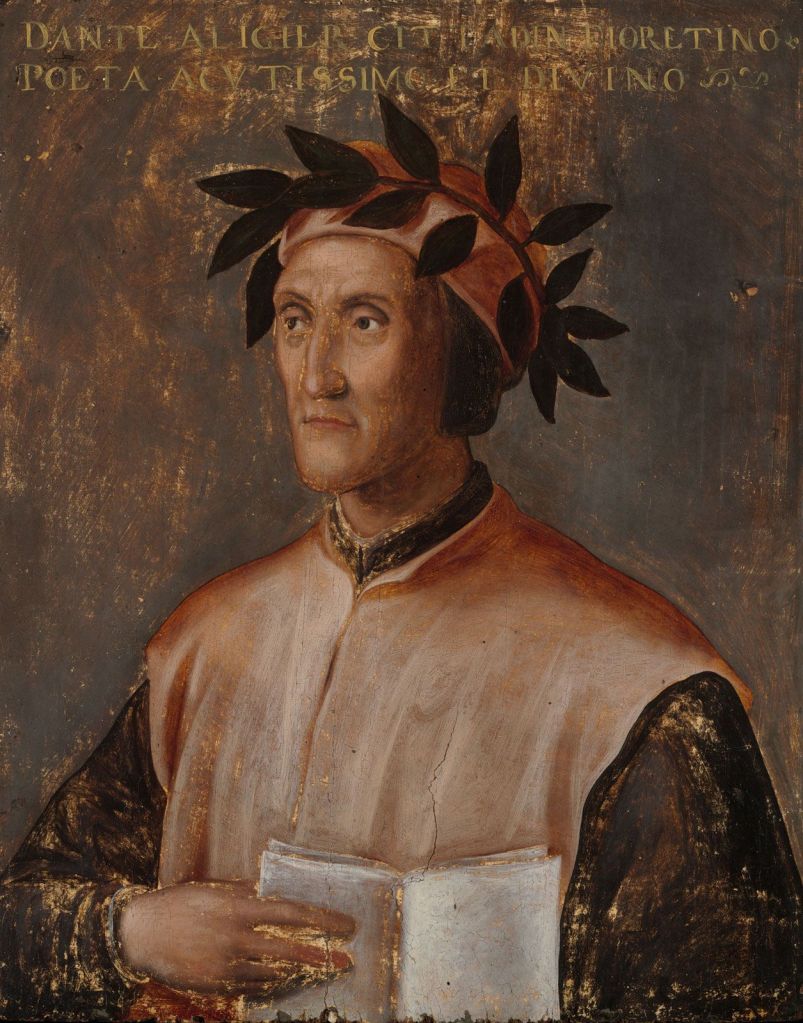
In the vast canon of world literature, few voices echo as powerfully across the centuries as that of Dante Alighieri. Best known for The Divine Comedy, Dante wasn’t just a poet—he was a philosopher, a political thinker, and a man in search of truth. His journey through Hell (Inferno), Purgatory (Purgatorio), and Paradise (Paradiso) is more than a medieval religious vision. It’s a guide to life—rich with insights on suffering, purpose, love, and the soul’s potential for growth.
Dante’s wisdom isn’t cloaked in abstraction. It’s blunt, poetic, and often painfully human. His work shows us how to confront our flaws, pursue meaning, and move—step by step—toward a life of deeper integrity.
The Journey Begins with Honesty
“In the middle of the journey of our life I found myself in a dark wood, for the straight way was lost.”
This opening line of The Divine Comedy is a confession. Dante is lost—not just in the forest, but in life. And that’s where wisdom starts: with the courage to admit we’ve strayed. Most of us will find ourselves in that “dark wood” at some point—confused, disillusioned, or morally off-course.
Dante’s first lesson? Stop pretending. Acknowledge the mess. This is the beginning of any real transformation.
Hell Is the Place Where We Stop Growing
Dante’s Hell isn’t just a place of punishment—it’s a mirror. Every sin he portrays is a form of self-destruction. In each circle, the damned are trapped in their own choices. The gluttonous are buried in filth. The wrathful fight endlessly. The liars wear cloaks of lead—beautiful outside, rotten within.
“Consider your origin: you were not made to live as brutes, but to follow virtue and knowledge.”
This powerful call from Ulysses in Inferno reminds us that human beings are meant for more than base survival. We’re built for growth—intellectually, morally, spiritually. When we stop striving, when we give in to inertia or vice, we descend into our own private hells.
Climb, Don’t Drift
If Inferno is about the damage of vice, Purgatorio is about healing. It’s a steep climb, filled with effort. Souls here work hard to become better. They sweat. They struggle. But they’re moving upward.
Dante shows that the good life doesn’t happen by drifting. It takes discipline and accountability. But it’s also filled with hope. In Purgatory, the air is clearer. The souls sing. There’s light ahead.
“The darkest places in hell are reserved for those who maintain their neutrality in times of moral crisis.”
This quote (often paraphrased) is a wake-up call: don’t be passive. Life demands moral courage. If you see injustice, speak. If you feel lost, act. Don’t sit on the fence while the world burns.
Love Wisely
Love is a recurring theme in Dante’s work—love misused, love redeemed, love that elevates the soul. The poet Francesca, who fell into an adulterous affair after reading romantic tales, says in Inferno:
“Love, that can quickly seize the gentle heart, took hold of him because of the fair body taken from me… Love led us to one death.”
Dante doesn’t condemn love itself—he condemns love without wisdom. Real love, he shows in Paradiso, lifts us toward God, truth, and transcendence. It’s not just desire. It’s devotion. It’s will aligned with good.
“The love that moves the sun and the other stars.”
This final line of The Divine Comedy reveals Dante’s ultimate vision: love as the force behind the cosmos—not romantic love, but divine love, rooted in justice, truth, and purpose.
Don’t Settle for Less Than the Truth
One of Dante’s boldest messages is that ignorance is dangerous. In Inferno, many souls are punished for believing lies or refusing to seek the truth. In Paradiso, knowledge is joy. The more one understands reality—about God, the universe, and the self—the more one is fulfilled.
Dante calls us to live consciously. Think. Question. Seek. Avoid the comfort of half-truths.
“You shall know the truth, and the truth shall make you free.”
Though this comes originally from the Gospel of John, Dante embodies this ideal. Truth liberates. Lies enslave.
Even the Worst Can Be Redeemed
One of the most hopeful aspects of Dante’s vision is that no soul is permanently fixed—at least not in life. As long as we’re breathing, we can change.
“There is no greater sorrow than to recall in misery the time when we were happy.”
This line from Francesca reminds us how loss and regret can haunt us. But Purgatorio teaches that even sorrow can be fuel for change. Regret, rightly channeled, becomes the engine of redemption.
Dante’s own journey—from lost soul in the dark wood to visionary in the stars—is a testament to that. He wrote his masterpiece not as a saint, but as a man who had known exile, despair, and failure.
What Did Dante Believe the Meaning of Life Was?
While Dante never summed it up in a single sentence, his entire Divine Comedy answers that question. For him, the meaning of life is to seek union with the divine through truth, virtue, and rightly ordered love.
“In His will is our peace.” (Paradiso, Canto III) — True happiness lies not in self-centered living, but in aligning with a greater, just, and loving purpose.
He believed we are not born to wander aimlessly or indulge blindly, but to rise—to struggle upward through confusion and suffering, toward truth and grace.
Aim for the Stars
“Fix your course by the stars, not by the lights of every passing ship.”
Though this quote is often attributed to Dante in modern paraphrase, it captures his worldview. The goal of life isn’t comfort or popularity. It’s moral clarity, eternal truth, and the kind of inner peace that doesn’t shift with every trend.
Dante’s life was hard—political exile, betrayal, poverty. But his vision was eternal. He invites us to take the long view. Don’t just react to life. Rise above it. Chart your course by something higher.
A Map for the Soul
Dante didn’t write The Divine Comedy just to entertain. He wrote it to guide. In his words, “To remove those living in this life from a state of misery and lead them to a state of happiness.”
That’s his mission—and it’s still relevant. Whether you’re in the middle of your own dark wood, stuck in bad habits, or yearning for something higher, Dante offers a path. Not a perfect map—but a clear direction:
Be honest. Grow. Love wisely. Seek truth. And above all, keep moving toward the light.
Because, as Dante reminds us: “The path to paradise begins in hell.”
***
~Dante Alighieri (1265–1321) was an Italian poet, philosopher, and political thinker, best known for his epic poem The Divine Comedy. Written in exile, the work charts a symbolic journey through Hell, Purgatory, and Paradise, and remains one of the most influential literary works in Western history. Dante is often called the “father of the Italian language” for his choice to write in the vernacular rather than Latin, making literature accessible to a broader audience. His life was marked by political conflict, personal loss, and a relentless pursuit of truth and justice.
©Excellence Reporter 2025
Share this:

Categories: Wisdom of Life




 Excellence Reporter