
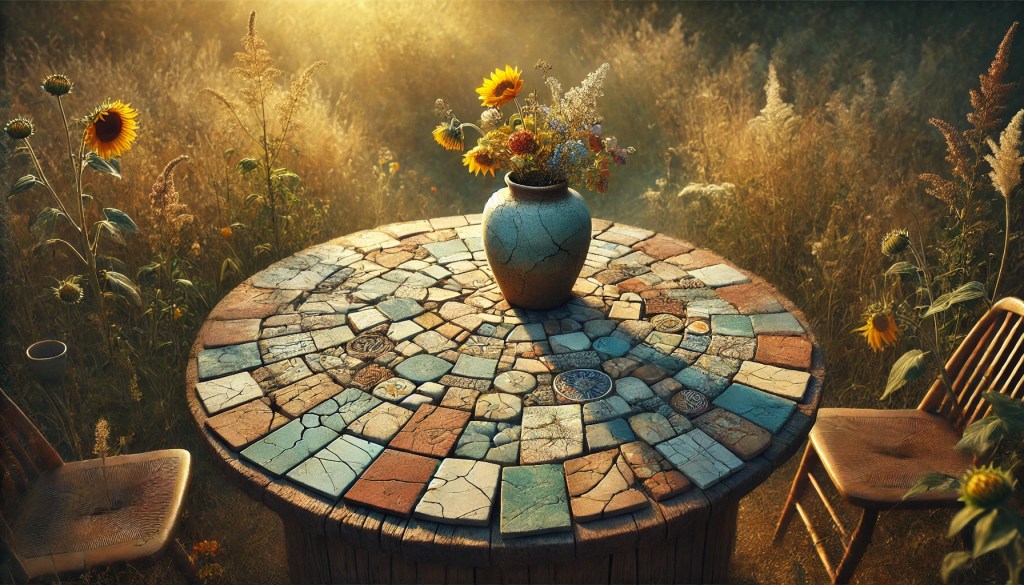
When we hear the word “mosaic,” we might picture a piece of art composed of small, diverse fragments—some smooth, some rough, each a different shape or hue. Separated, these pieces might look unremarkable or even flawed. But placed together with care, they form a pattern of surprising depth and brilliance. The philosophy of Wabi-Sabi invites us to view life in a similar fashion: a collection of imperfect moments, relationships, and experiences that, when seen as a whole, create a singular and breathtaking design.
Each chapter of our lives—childhood wonder, teenage struggles, midlife reevaluations, and golden-year reflections—contributes a distinct piece to the mosaic. Some shards might be difficult memories: heartbreaks, failures, or losses. Others represent our joys: triumphs, connections, and personal milestones. We might be tempted to discard the pieces we label as “bad,” but in Wabi-Sabi, nothing is wasted. Even our most painful memories can bring insight, compassion, or resilience—qualities that deepen the overall tapestry of who we are.
By embracing imperfection, we recognize that every piece, no matter how jagged or discolored, has a place in our life’s artwork. This perspective counters the societal urge to present a flawless image, as if only the glossy tiles are worth displaying. In truth, the real essence of a mosaic lies in its diversity and irregularities. Similarly, the depth of our humanity emerges from the interplay of bright and dark moments. A life without challenges would not only be unrealistic but also deprive us of profound growth and empathy.
Wabi-Sabi’s “mosaic mindset” also affects how we approach the passage of time. Instead of seeing life as a race toward a final state of polished perfection, we can accept it as an ongoing process of placement and realignment. Pieces may shift with new knowledge, or we may discover aspects of ourselves we never knew were missing. We might go through periods of dramatic change that rearrange our entire sense of identity, like a mosaic’s design being re-envisioned by an artist’s evolving eye. Such transformations can feel disorienting, but they also reinvigorate our capacity to see the beauty in new shapes.
Relationships, too, form key fragments in the mosaic.
Each person we encounter leaves a distinct mark, be it a fleeting interaction or a long-lasting bond. Some experiences challenge us, teaching lessons about boundaries or self-worth. Others buoy our spirits, reminding us we’re not alone. Over time, these relational pieces fit together, illuminating how our connections with others have shaped us. Wabi-Sabi urges us not to label these encounters simply as “good” or “bad,” but to see them as part of the grand collage of life, each contributing nuance and color to our personal story.
In practical terms, living with a mosaic mindset means releasing the idea that any single part of life must be flawless. The messy house, the job we took to pay the bills, the argument we had with a loved one—these are tiles in our unfolding masterpiece. By approaching them with curiosity and acceptance, we might discover hidden forms of beauty and meaning. A cluttered kitchen can testify to lively family gatherings, while a job we don’t love might serve as the impetus to discover our true calling.
Ultimately, Wabi-Sabi helps us see that the mosaic of life is always in progress. We are both the artists and the art—continually placing, discarding, and rearranging pieces. The result isn’t static perfection but a dynamic, ever-evolving portrait of our authentic selves. Each imperfection contributes to this wholeness, weaving moments of laughter, pain, love, and learning into a singular tapestry that is entirely our own. By revering these fragments instead of shunning them, we become participants in a creative process that celebrates the beauty of being gloriously and unavoidably human.
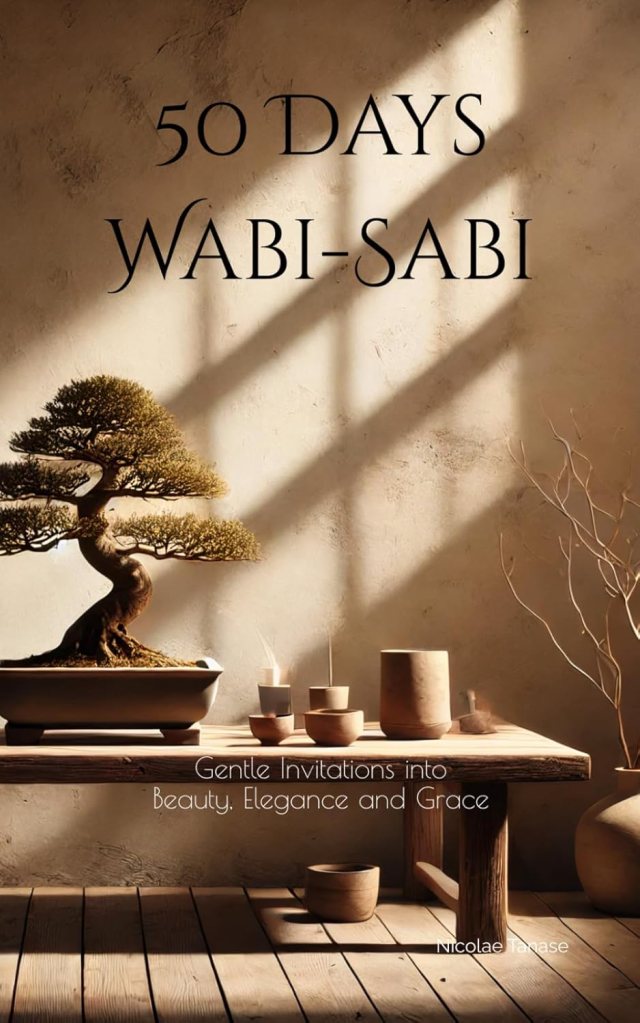
Excerpt from 50 Days Wabi-Sabi: Gentle Invitations into Beauty, Elegance and Grace by Nicolae Tanase
©Excellence Reporter 2025
Share this:

Categories: Wabi-Sabi





 Excellence Reporter