
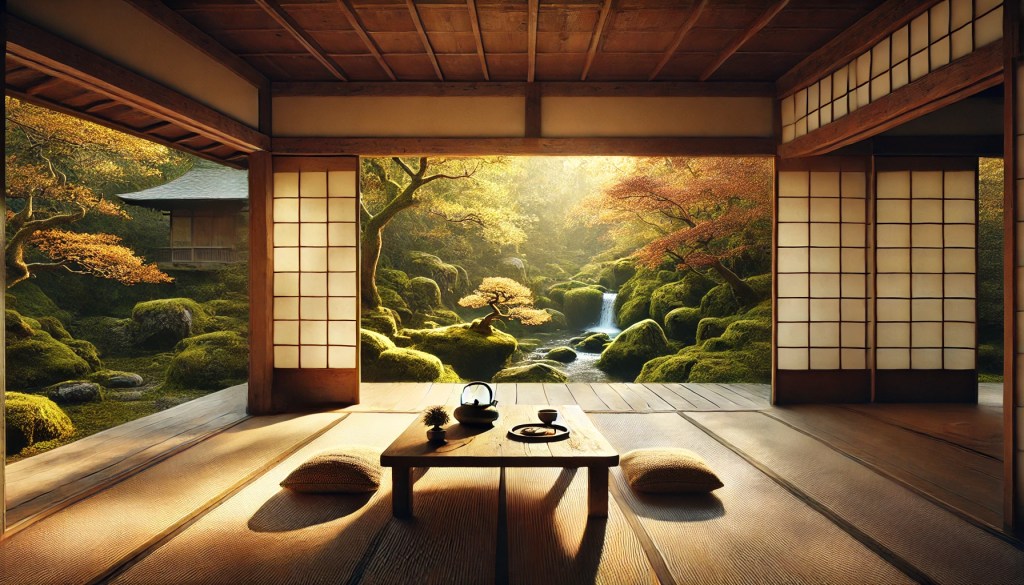
Imagine a traditional Japanese tea house, simple and unadorned. There are no extravagant decorations, no excessive furniture—just a Tatami mat, a wooden table, and a single flower arranged in perfect harmony. The space is not empty; rather, it is full of intention, peace, and quiet beauty. This reflects a deeper truth about happiness: it is not found in material things, but in the quality of one’s inner life. Ikigai teaches that true fulfillment does not come from what we accumulate, but from who we become—that life’s greatest joys arise not from external wealth, but from inner peace and connection.”
In Japan, the philosophy of Wabi-Sabi encourages people to appreciate simplicity, imperfection, and the quiet beauty of things that are modest and natural. It teaches that happiness is not found in having more, but in appreciating what is already here. A cracked teacup, a weathered wooden floor, a well-worn kimono—all of these things are valued not because they are flawless, but because they carry stories, history, and meaning. Recognizing that material belongings can be transient, you turn your attention inward, reflecting on the wealth of character, compassion, and creativity that rests within. By doing so, you shift from a mindset of “always needing more” to an understanding that growth of spirit and heart can offer a more stable foundation of happiness.
This perspective doesn’t dismiss the comfort or convenience that possessions can bring. Indeed, items such as a reliable car or a well-crafted tool can improve daily life. The issue arises when identity and self-worth hinge primarily on what you own—an approach that leaves you vulnerable to insecurity and envy. If you measure success by material benchmarks alone, contentment becomes fleeting; as soon as a newer model or a bigger house appears, the cycle of comparison reignites. In contrast, investing in who you are—your skills, principles, relationships, and sense of purpose—yields returns that don’t depreciate with time.
One way to start reorienting your source of happiness is through self-reflection about what truly matters. Ask yourself: Which qualities make you feel most alive or fulfilled—kindness, resilience, a sense of wonder, or patience? Which activities tap into your strengths and allow for self-expression? And how might cultivating these traits or passions sustain a deeper joy, independent of external validation? By anchoring your sense of worth in attributes and pursuits that align with your values, you lay the groundwork for a more enduring contentment.
Additionally, you can integrate small exercises in gratitude or mindfulness into your daily life. For instance, each evening, you might write down a positive quality you demonstrated that day, such as patience during a tense situation or courage in tackling a new challenge. These reflections reaffirm that your happiness rests in your responses to life, not just in the objects you accumulate. Over time, these notes serve as an uplifting record of your personal evolution and resilience, providing comfort when circumstances feel uncertain.
Shifting focus away from possessions also enriches your relationships. When you’re not preoccupied with keeping up appearances or chasing status, you can be more present for others, offering empathy and real listening rather than surface-level exchanges. Think of a shared meal with loved ones in a humble setting, where the warmth of conversation and connection overshadows any flashy display. These moments foster a sense of belonging and emotional richness that outlasts the trendiest gadget or the latest fashion.
While purchasing new items may offer temporary pleasure, nurturing who you are aligns with a broader journey of becoming. Perhaps your ikigai involves creating art, supporting a social cause, or mentoring younger people. Devoting energy to these callings gives you a sense of direction that transcends transient highs. Instead of briefly lighting up your emotions, it feeds you continuously, reinforcing a lasting contentment.
Of course, stepping back from a material-focused mindset can be a gradual process. Society often bombards us with messages that acquisition equals success, and it’s easy to slip into moments of envy or dissatisfaction. Gentle self-awareness helps you recognize these tendencies without harsh self-judgment. When you catch yourself longing for the next shiny item, pause to consider: “Am I truly dissatisfied, or am I responding to an external message? Could my time or resources be better channeled into furthering my own growth or that of my community?”
There is a Japanese saying: “Just look carefully.” It reminds us that when we slow down and truly observe life, we realize that happiness has always been present—we simply need to recognize it.
Ikigai teaches that happiness is not something to be collected, but something to be lived. Finding happiness in who you are—your unique gifts, relationships, and capacity for self-improvement—liberates you from the endless treadmill of material pursuit. Your sense of contentment endures beyond trends, financial shifts, or the lure of what others might possess. Grounded in self-knowledge and internal values, you carry a quiet assurance that no outside force can easily disrupt. And in that assurance, you discover a more stable and profound satisfaction, one that unfolds each day through your evolving character rather than the fleeting glimmer of material gain.
©Excellence Reporter 2025
Share this:

Categories: Awakening







 Excellence Reporter